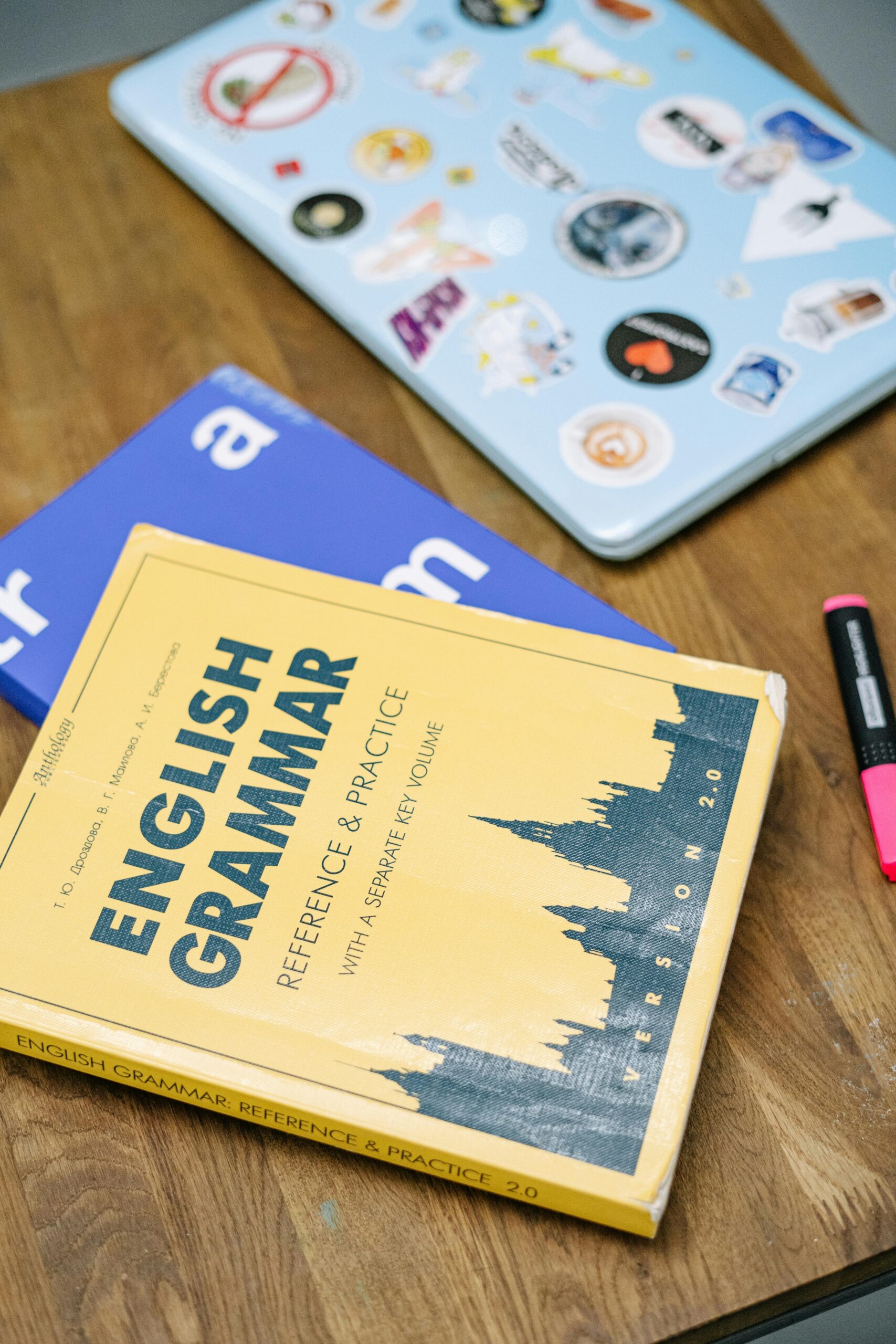
Learning English grammar is like building a house—without a strong foundation, everything becomes shaky. Whether you’re a student, job seeker, freelancer, or preparing for IELTS/TOEFL, good grammar improves writing, speaking, and confidence.
This guide gives you a complete, beginner-friendly overview of English grammar with clear examples, tables, and simple explanations. By the end of this article, you’ll understand how sentences work and how to build them correctly.
🧱 1. Parts of Speech — The Building Blocks of English
Every word in English belongs to a category called Parts of Speech. There are 8 of them:
| Part of Speech | What it Means | Examples |
|---|---|---|
| Noun | Name of person, place, thing | Ali, London, book |
| Pronoun | Replaces noun | he, she, it, they |
| Verb | Action/State of being | run, eat, is, are |
| Adjective | Describes a noun | big, beautiful, fast |
| Adverb | Describes verb/adjective | quickly, silently |
| Preposition | Shows relation | on, in, at, to |
| Conjunction | Connects words/sentences | and, but, because |
| Interjection | Shows emotion | wow!, oh!, alas! |
Example sentence:
The smart girl quickly solved the problem.
• Noun: girl, problem
• Adjective: smart
• Verb: solved
• Adverb: quickly
🏗 2. Types of Sentences
English sentences fall into four categories:
| Type | Purpose | Example |
|---|---|---|
| Declarative | To state something | I like reading. |
| Interrogative | To ask a question | Do you speak English? |
| Imperative | To give order or request | Please sit down. |
| Exclamatory | Strong feelings | What a beautiful day! |
🔤 3. Articles (a, an, the)
Articles come before nouns.
Indefinite Articles — a / an
Used for non-specific, general things.
- a → before consonant sounds
a book, a car, a dog - an → before vowel sounds
an apple, an hour, an idea
Definite Article — the
Used for specific things.
I saw a dog. The dog was brown.
(first time general → second time specific)
✍ 4. Subject + Verb Agreement
The verb must match the subject.
| Singular (one) | Verb + s/es | Example |
|---|---|---|
| He | writes | He writes daily. |
| She | eats | She eats rice. |
| It | runs | It runs fast. |
| Plural (more than one) | Verb without s/es | Example |
|---|---|---|
| They | write | They write daily. |
| You | eat | You eat well. |
I and You are special → no s/es
🕒 5. Tenses — The Heart of English Grammar
Tenses show time: Present, Past, Future.
Each has 4 forms → 12 in total.
| Tense | Example |
|---|---|
| Present Simple | I work. |
| Present Continuous | I am working. |
| Present Perfect | I have worked. |
| Present Perfect Continuous | I have been working. |
| Past Simple | I worked. |
| Past Continuous | I was working. |
| Past Perfect | I had worked. |
| Past Perfect Continuous | I had been working. |
| Future Simple | I will work. |
| Future Continuous | I will be working. |
| Future Perfect | I will have worked. |
| Future Perfect Continuous | I will have been working. |
✍ Present Simple — The Basic Tense
Used for habits and facts.
✔ I eat breakfast every day.
✔ Water boils at 100°C.
⏳ Present Continuous — Happening Now
Form: am/is/are + verb+ing
✔ She is studying now.
✘ She is study now. (wrong)
🕘 Past Simple — Completed Action
✔ I visited Karachi last year.
✔ He bought a new phone.
🔜 Future Simple — Plans & Predictions
✔ I will travel tomorrow.
✔ It will rain today.
🧩 6. Modals — Can, Could, Should, Must, May, Might, Will
Modals express possibility, permission, ability, advice.
| Modal | Meaning | Example |
|---|---|---|
| can | ability/permission | I can swim. |
| could | past ability | She could read at 4. |
| should | advice | You should sleep early. |
| must | strong advice/necessity | You must work hard. |
| may/might | possibility | It may rain. |
| will | future decision | I will call you. |
📌 7. Active & Passive Voice
Active → Subject does the action
Passive → Action happens to subject
| Active | Passive |
|---|---|
| Ali writes a letter. | A letter is written by Ali. |
| They cleaned the room. | The room was cleaned by them. |
🧱 8. Direct & Indirect Speech
| Direct Speech | Indirect Speech |
|---|---|
| He said, “I am happy.” | He said that he was happy. |
| She said, “Do it now.” | She ordered to do it at once. |
Rules:
- Present → Past
- I → he/she
- now → then
- today → that day
🧠 9. Common Grammar Mistakes to Avoid
❗ I am agree ✘ → I agree ✔
❗ She don’t like tea ✘ → She doesn’t like tea ✔
❗ He is playing cricket daily ✘ → He plays cricket daily ✔
❗ I am go to school ✘ → I go to school ✔
🏆 10. Tips to Improve English Grammar Faster
✔ Read books, articles and news daily
✔ Watch English movies with subtitles
✔ Practice speaking with friends or apps
✔ Write a daily journal in English
✔ Learn 10 new words every day
✔ Think in English, don’t translate
✔ Check mistakes and correct them
Final Summary
English grammar is not difficult—it’s a system. Once you understand parts of speech, tenses, articles, modals, subject-verb agreement, and learn to avoid common mistakes, your speaking and writing improve instantly.
Practice daily, stay consistent, and treat English like a tool—not a subject.
The more you use it, the faster you master it.